 N, 129°51W
on 26 June 1993 and ending near 46°32N,
129°35W on about 16 July 1993 (Dziak
et al. 1995; Fox
et al. 1995). In July and August 1993, the Canadian remotely operated
vehicle ROPOS was deployed from the NOAA ship Discoverer to explore and
sample the area affected by the seafloor eruption (Embley
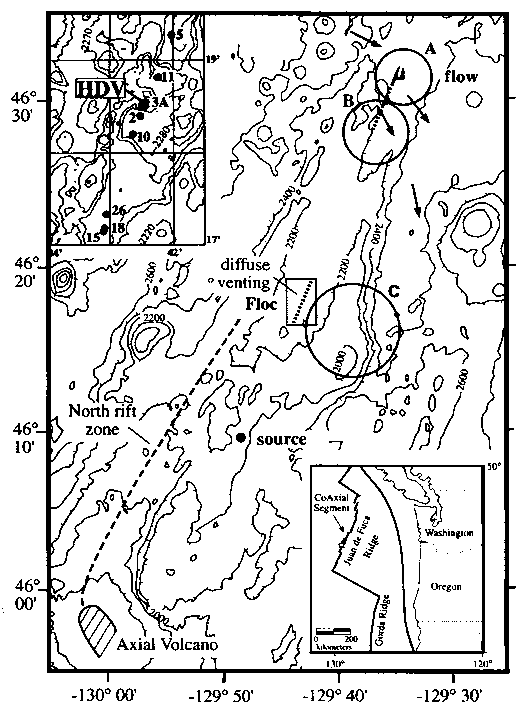
et al. 1995) (figure 1). Three event plumes
were found in July 1993 (Baker
et al. 1995). Given the locations and approximate ages of the plumes
(Baker
et al. 1995; Massoth
et al. 1995) and the prevailing current speed and direction (Cannon
et al. 1995), it is likely that all three event plumes originated near
the Flow site during the seismically active period. We were able to obtain one
pair of titanium major samples during ROPOS dive 234 on 1 August (approximately
2 weeks after the end of the volcanic event) from a 22°C vent at the lava
Flow site (marker P1, 46°31.42N, 129°34.85W;
a 51°C vent was found later on the same dive). Two more venting areas (Floc
site centered near 46°18N, 129°42.5W,
and Source site centred near 46°9.3N,
129°48.6W, which is ca. 10 km to
the SSE of the initial event swarms) were found and many additional seafloor vent
fluid samples were obtained with Alvin in October 1993, July 1994 and July 1995
to provide time series data on temperature and fluid chemistry. A multidisciplinary
collection of papers describes some of the initial results of research on the
CoAxial segment (Fox
1995).
N, 129°51W
on 26 June 1993 and ending near 46°32N,
129°35W on about 16 July 1993 (Dziak
et al. 1995; Fox
et al. 1995). In July and August 1993, the Canadian remotely operated
vehicle ROPOS was deployed from the NOAA ship Discoverer to explore and
sample the area affected by the seafloor eruption (Embley
et al. 1995) (figure 1). Three event plumes
were found in July 1993 (Baker
et al. 1995). Given the locations and approximate ages of the plumes
(Baker
et al. 1995; Massoth
et al. 1995) and the prevailing current speed and direction (Cannon
et al. 1995), it is likely that all three event plumes originated near
the Flow site during the seismically active period. We were able to obtain one
pair of titanium major samples during ROPOS dive 234 on 1 August (approximately
2 weeks after the end of the volcanic event) from a 22°C vent at the lava
Flow site (marker P1, 46°31.42N, 129°34.85W;
a 51°C vent was found later on the same dive). Two more venting areas (Floc
site centered near 46°18N, 129°42.5W,
and Source site centred near 46°9.3N,
129°48.6W, which is ca. 10 km to
the SSE of the initial event swarms) were found and many additional seafloor vent
fluid samples were obtained with Alvin in October 1993, July 1994 and July 1995
to provide time series data on temperature and fluid chemistry. A multidisciplinary
collection of papers describes some of the initial results of research on the
CoAxial segment (Fox
1995).
Figure 1: Map of CoAxial area, showing regional setting (inset bottom), location of lava Flow site, Floc site, and Source site. Circles are event plumes labelled A, B and C in order of both discovery and increasing age at the time of sampling (Baker et al. 1995; Massoth et al. 1995). Arrows show current direction at 1800 m depth (Cannon et al. 1995). A detailed map of the Floc site (inset top) shows the location of markers referred to in the text. Bathymetric contour interval is 200 m.
Return to previous section or go to next section